

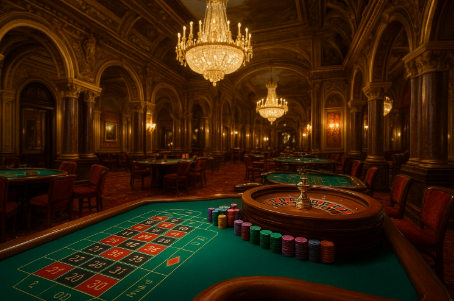
Casinos have been centers of entertainment, social interaction, and risk-taking for centuries. Long before the rise of online gaming, grand gambling houses across Europe set the stage for the vibrant casino culture we know today. These early establishments weren’t just about money—they shaped art, architecture, and even politics.
Here are some fascinating facts about the world’s oldest casinos and how they helped define modern gaming as we know it.
1. The World’s First Official Casino Opened in Venice in 1638
The title of the world’s oldest casino belongs to the Casinò di Venezia in Venice, Italy. Established in 1638, it was originally called the Ridotto, meaning “private room.” The Venetian government created it to provide a controlled and legal environment for gambling during carnival season, aiming to reduce illegal betting across the city.
Located in the Palazzo Dandolo, the casino welcomed aristocrats dressed in elaborate masks and capes, a tradition that mirrored Venice’s famous masquerade culture. Players wagered on games like biribi (a lottery-style game) and bassetta, a card game similar to faro.
Today, the Casinò di Venezia still operates—making it not only the oldest casino in existence but also a remarkable symbol of how organized gaming began as both entertainment and social ritual.
2. Monte Carlo’s Casino Helped Save a Nation’s Economy
The Casino de Monte-Carlo in Monaco opened its doors in 1863, transforming the small principality’s financial future. At the time, Monaco faced bankruptcy, and its rulers, the Grimaldi family, sought a creative solution. Princess Caroline, wife of Prince Florestan I, proposed establishing a luxurious casino to attract Europe’s wealthy elite.
The plan worked spectacularly. With its stunning Belle Époque architecture and glamorous clientele, Monte Carlo became synonymous with high society and sophistication. The casino’s profits were so significant that they funded much of Monaco’s public infrastructure—allowing citizens to live tax-free, a benefit that still exists today.
Monte Carlo’s legacy isn’t just economic—it’s cultural. The casino inspired countless novels, films, and spy thrillers, including James Bond’s “Casino Royale.”
3. Germany’s Casino Culture Dates Back to the 18th Century
Germany was an early hub for European gambling, with several of its famous spa towns doubling as gaming centers. The Kurhaus Baden-Baden, which opened in 1824, remains one of the most elegant examples. Designed by Friedrich Weinbrenner, the casino drew European nobility seeking both luxury and relaxation.
Baden-Baden’s casino became a model for combining architecture, social etiquette, and gaming sophistication. The writer Fyodor Dostoevsky, who famously struggled with gambling addiction, based parts of his 1867 novel The Gambler on his experiences there.
Even today, Baden-Baden’s grandeur—complete with chandeliers, frescoed ceilings, and strict dress codes—preserves the charm of Europe’s 19th-century aristocratic gaming culture.
4. France’s Palais de la Méditerranée and the Birth of Riviera Glamour
The French Riviera became a magnet for gamblers in the early 20th century, especially with the opening of Palais de la Méditerranée in Nice in 1929. Built during the golden age of Art Deco, it was a masterpiece of design and luxury.
Unlike earlier casinos that catered mainly to aristocrats, Palais de la Méditerranée attracted artists, writers, and Hollywood stars. Its location on the Promenade des Anglais turned Nice into a major entertainment destination, influencing the design and culture of seaside casinos worldwide.
Though it closed temporarily in the 1970s, the casino was later restored as part of a luxury hotel complex, continuing the Riviera’s legacy of elegance and innovation in gaming.
5. The American Frontier’s Early Casinos Were Born in Saloons
While Europe’s casinos were opulent and exclusive, early American gambling venues were far more rugged. In the 1800s, saloons across frontier towns like New Orleans, Deadwood, and San Francisco served as makeshift casinos.
Games such as poker, faro, and roulette were played for cash, gold dust, or goods, reflecting the adventurous spirit of the Wild West. Unlike their European counterparts, these early U.S. gambling houses had little regulation and often doubled as social gathering spots.
By the early 1900s, formal casinos began to replace saloons. Nevada’s legalization of gambling in 1931 marked the birth of Las Vegas, setting the stage for a new chapter in casino history.
6. Oldest Casinos Shaped Modern Gaming
The influence of the world’s earliest casinos extends far beyond their walls. They established the foundations of fair play, architecture, and regulation that modern gambling still relies on. The concept of dress codes, loyalty programs, and even responsible gaming policies all trace their roots to these early institutions that valued status, security, and reputation.
In today’s digital age, the legacy continues through online gaming platforms like CasinoWhizz, that emulate the excitement of historic venues, showcasing how innovation and tradition coexist—where centuries of casino culture have evolved into the online experiences we enjoy today.
From Venice’s candlelit halls to Monte Carlo’s glittering salons and beyond, the story of the world’s oldest casinos is a reminder that gambling has always been as much about human connection and culture as it is about chance.
Conclusion
The world’s oldest casinos are living museums of human ingenuity, style, and risk. They reflect how gambling evolved from exclusive social gatherings to global entertainment empires. Each of these venues—whether standing on Venetian canals or overlooking the Mediterranean—tells a story of adaptation and resilience.
Their enduring presence proves that while games of chance have changed, the thrill of the wager and the social heartbeat behind it remain timeless.